Origin
A cake from San Sebastián
The Basque cheesecake is not an old tradition. It was invented in a single bar — and it is not even fifty years old.
La Viña, 1990
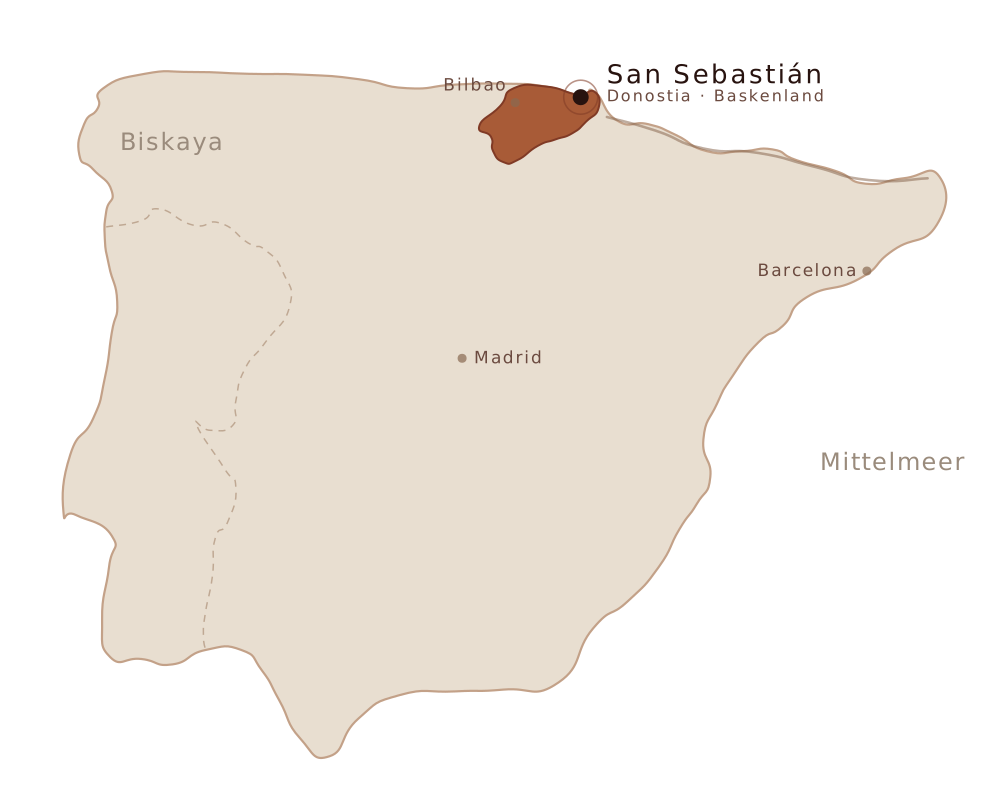
On Calle 31 de Agosto in the old town of San Sebastián there is a bar called La Viña. Around 1990 a cheesecake was developed there that had little to do with what a cheesecake was then understood to be: no pastry base, no gelatine, no chilling until firm. Instead cream cheese, cream, egg and sugar, poured into a tin lined with baking paper and baked at temperatures at which a cheesecake normally fails.
That is precisely the point. Above 200 °C the surface caramelises far beyond what anyone would normally allow — it turns dark brown, almost black. What looks like a mistake from the outside has barely set on the inside: a centre closer to cream than to cake.
Almost burnt outside, barely baked inside — and everything lies in between.
Why “Basque”?
The cake got its name outside the Basque Country, not in it. There it is simply called tarta de queso — cheesecake. Only when chefs and food magazines picked it up internationally from around 2019 did it need a qualifier to set it apart from New York cheesecake. Since then Basque has stood for the method: no base, high heat, dark crust.
What we have made of it
We bake by this method — high heat, dark crust, soft centre. In one respect we depart from it: our cakes stand on a biscuit base of our own. That is not the original from San Sebastián but our version. It holds the cake together when cut and adds a second, crisp note against the soft filling.
Everything else stays as intended: baked to order, in small numbers, and no longer in the oven than necessary — but no shorter either.
Impressions
How it looks with us
Our own photographs from the bakery. We do not show pictures of the Basque Country — we were not there with a camera.


